Blockchain technology is foraying into multiple sectors from finance to healthcare but perhaps its most revolutionizing venture has been in the gaming industry. From a zero-value market size, the blockchain gaming industry grew to $3 billion in 2021. Furthermore, it is projected to rise to $39.7 billion by 2025. Fuelled by NFT (Non Fungible Tokens) generation capabilities, free-to-play and play-to-earn models, the blockchain gaming industry has attracted over 1.5 million diverse gamers across the globe.
By leveraging technologies like NFTs, blockchain games are making ownership of in-game assets easier, economical and trustless. The endless possibilities of blockchain technology in the gaming world are attracting millions of gamers and investors from across the globe. Despite the strong growth trends and potential for profit in the blockchain gaming industry, the market abounds with challenges and obstacles. Click here to dive deeper into the world of blockchain gaming and understand its key drivers and challenges.
Telecom players are increasingly looking to the gaming sector for new revenue opportunities, but disruptive and ground-breaking applications enabled by augmented reality (AR) and 5G’s combination of high data throughput and low latency and are yet to be developed, according to industry analysts.
With the heat now on for telcos to identify ways to get a return on their 5G investments and develop new opportunities using the capabilities the latest mobile broadband generation has to offer, there has been plenty of activity in this area in recent months. Last week, US operator Verizon unveiled work on an AR adventure thriller that uses volumetric video (modern 3D holograms) to provide “an unbelievable immersive experience.” The production, called Helios, is being developed in partnership with immersive studio Novelab and 30 Ninjas, a digital entertainment company co-founded by film director and producer Doug Liman.
Supported by Verizon’s 5G Ultra Wideband 5G service, the immersive experience will allow users of 5G-capable Android and iOS smartphones to follow the plotline of a missing character and uncover the mystery by navigating the story and piecing clues together.
In addition to Verizon, Deutsche Telekom, EE, Globe Telecom, Orange, SK Telecom, SoftBank Corp. and TELUS have joined Niantic’s Planet-Scale AR Alliance, which has a mission to create “amazing real-world AR experiences that demonstrate the possibilities of 5G,” including ultra-reliable low latency, enhanced mobile broadband, network slicing and edge computing.
We’ve already seen some interesting attempts this year, as Japanese operator KDDI touted a successful use of network slicing and 5G standalone (SA) for 8K PlayStation game streaming. The demonstration was announced in February and is part of an initiative with Sony to create new business use cases and entertainment services based on 5G SA.
At the start of the year, US operator AT&T joined forces with NVIDIA to offer 5G GeForce NOW subscriptions, which it claimed offers “one of the world’s best gaming experiences.”
Another example in the gaming and immersive content field involves South Korean telco SK Telecom, which claimed it turned the country into the first Asian market to offer Microsoft Xbox’s cloud gaming service in 2020: A year later it created an AR app based on 5G edge cloud designed to offer immersive experiences for tourists.
Analysts feel that the introduction of new features and services, such as gaming on the move, some AR apps and 8K videos, which require greater bandwidth and higher speeds, will help to highlight the merits of 5G.
Content will also have a huge role, as it is paramount in driving uptake and usage of next-generation networks. Therefore, expect all providers shouting as loud as possible about how good their fibre and 5G networks are, as rollout ramps up significantly.
After all, the big challenge for telecoms operators remains: How to find the right partnerships, content and marketing strategies to convince their existing and new customers that upgrading to the fastest network out there is, in fact, more needed than ever. (Telecom TV Report)
TRAI picks Delhi airport, Bengaluru metro and Kandla port for 5G pilots
The telecom regulator (TRAI) has identified Delhi airport, ‘smart’ city Bhopal, the Bengaluru metro, and Deendayal port (Kandla) in Gujarat for conducting pilot projects using street furniture and aerial cable for the deployment of small cells, Business Standard reported.
These pilot projects are crucial to understand the regulatory and policy interventions which will be required, especially with the launch of 5G services, when more small cells will become the backbone to support a larger traffic volume per unit area.
While macro towers will be deployed as they were for 4G, huge proliferation of small cells, which have a coverage area as low as 10 metres to a few kilometres, is expected to ensure high data speeds and low latency, especially with the use of high band spectrum. The Cellular Operators Association of India has been pushing to include small cells in the Telecom Regulatory Authority of India’s (Trai’s) framework for right of way.
After years of hype and a bumpy first year of launches, carrier 5G networks are almost here. The technology is supposed to change your life with its revolutionary speed and responsiveness. But before we get into that, it’s important to understand what the technology is, when and how it will affect you, and how to distinguish between (the still growing) hype and reality.
Just like with everything else, you must give 5G some time to mature.
Things are certainly getting better — carriers continue to expand 5G coverage into more cities, and new devices compatible with multiple networks are coming out. But just how quickly that life-changing aspect of 5G will arrive remains up in the air. That’s exacerbated by the novel coronavirus, which has locked down millions around the world, potentially slowing the 5G rollout and dampening consumer enthusiasm for pricey new devices, even with those stimulus checks.
All this means 5G is slowly inching from years of promises — ever since Verizon talked about moving into the area four and a half years ago to AT&T kicking off the first official mobile network at the end of 2018 and T-Mobile going nationwide in December — to becoming reality for more than a handful of early adopters. Beyond a big speed boost, 5G has been referred to as foundational tech that’ll supercharge areas like self-driving cars, virtual and augmented reality and telemedicine services such as remote surgery. It will eventually connect everything from farming equipment to security cameras and, of course, your smartphone.
But what exactly is 5G? Why are people so excited? This CNET Report is a breakdown of why the next generation of wireless technology is more than just a boost in speed. (If you’re really interested, check out our glossary of 5G terms.)
What is 5G?
It’s the next (fifth) generation of cellular technology, and it promises to greatly enhance the speed, coverage and responsiveness of wireless networks. How fast are we talking? Carriers like Verizon and AT&T have shown speeds surging past 1 gigabit per second.
That’s 10 to 100 times speedier than your typical cellular connection, and even faster than anything you can get with a physical fiber-optic cable going into your house. (In optimal conditions, you’ll be able to download a season’s worth of Stranger Things in seconds.)
Is it just about speed?
No! One of the key benefits is something called low latency. You’ll hear this term a lot. Latency is the response time between when you click on a link or start streaming a video on your phone, which sends the request up to the network, and when the network responds, delivering you the website or playing your video.
That lag time can last around 20 milliseconds with current networks. It doesn’t seem like much, but with 5G, that latency gets reduced to as little as 1 millisecond, or about the time it takes for a flash on a normal camera.
That responsiveness is critical for things like playing an intense video game in virtual reality or for a surgeon in New York to control a pair of robotic arms performing a procedure in San Francisco. You know that little lag when you’re on a Zoom video conference call? 5G will help eliminate some of those awkward, “Sorry, you go ahead” moments after people talk over each other. That lag time won’t completely go away, especially if you’re communicating with someone halfway around the world. The distance matters, since that info still has to travel there and back.
But a virtually lag-free connection means self-driving cars have a way to communicate with each other in real time — assuming there’s enough 5G coverage to connect those vehicles.
Are there other benefits?
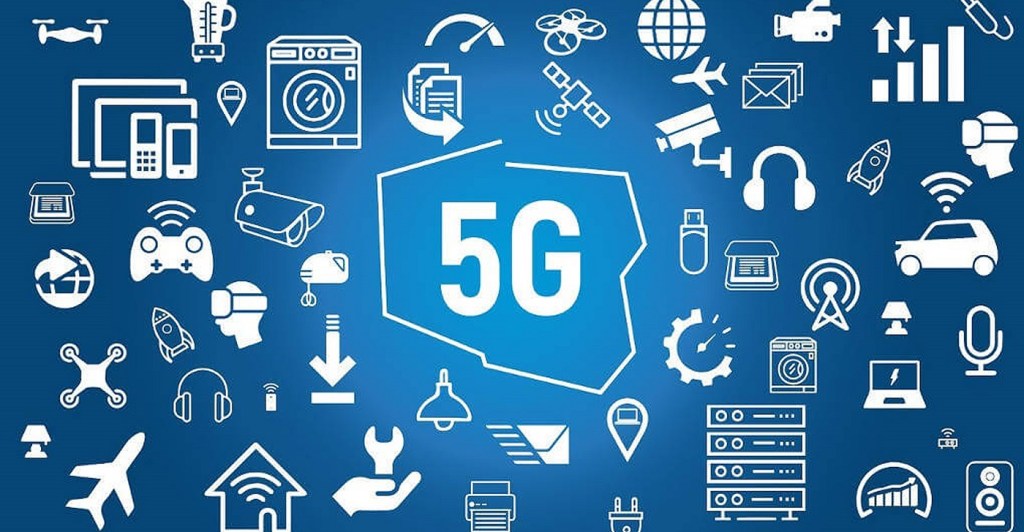
The 5G network is designed to connect a far greater number of devices than a traditional cellular network does. That internet of things trend you keep hearing about? 5G can power multiple devices around you, whether it’s a dog collar or a refrigerator.
The 5G network was also specifically built to handle gear used by businesses, such as farm equipment or ATMs, and can adjust for differing needs. For example, some products like sensors for farming equipment don’t need a constant connection. Those kinds of low-power scanners are intended to work on the same battery for 10 years and still be able to periodically send data.
How does it work?
5G initially used super high-frequency spectrum, which has shorter range but higher capacity, to deliver a massive pipe for online access. Think of it as a glorified Wi-Fi hotspot.
But given the range and interference issues, the carriers are also using lower-frequency spectrum — the type used in today’s networks — to help ferry 5G across greater distances and through walls and other obstructions.
Last year, Sprint (now part of T-Mobile) claimed it has the biggest 5G network because it’s using its 2.5 gigahertz band of spectrum, which offers wider coverage. But T-Mobile in December launched a nationwide network using even lower-frequency spectrum, which can spread further. T-Mobile intends to use Sprint’s 2.5 GHz spectrum to add more speed to its network. AT&T also launched 5G with lower bands at the end of last year, and says it plans to have nationwide coverage by the end of summer.
The result is that the insane speeds companies first promised won’t always be there, but we’ll still see a boost from what we get today with 4G LTE.
The COVID-19 pandemic will accelerate digital adoption in India as increasing number of people shop online and small businesses digitise, Morgan Stanley said crediting Reliance Jio’s 4G telecom services for spurring the digital economy by propelling internet usage in the country.
In a 53-page report on ‘India’s Digital Economy in a Post-COVID-19 World’, Morgan Stanley said 2020 will likely see increasing online penetration in grocery and will put a few Super Apps into motion.
India’s total online shopper base at 30 per cent of its internet population is low when compared with 78 per cent in China and 70-plus per cent in the US.
Morgan Stanley projected India’s 670 million internet users to rise to 914 million by 2027 and online shoppers to jump to 590 million from 190 million in 2020. The average spend per online shoppers is also projected to nearly double to USD 318.
While in the past few years digital adoption in India has been evolving with increasing 4G adoption and rising internet penetration, the overall transactional base was still small.
“The launch of Reliance Jio’s 4G telecom services in September 2016 helped spur the digital economy in India as it propelled internet usage in the country, with fast, reliable, and cheap 4G services leading to significant growth in data usage (especially on music and video content),” it said.
Morgan Stanley said COVID-19 has relieved some apprehension relating to digital transactions. “We believe COVID-19 could accelerate the shift to online transactions (such as e-commerce and payments) and provide a tailwind to growth in India’s digital economy.”
Stating that a larger increase in its online shopping base is needed to drive growth in its digital economy, it said COVID-19 has the potential to do just that.
The power of online has been seen in the past few months as start-ups helped consumers shop, pay for bills, converse, entertain, and collaborate without much physical contact.
“We believe that this digital adoption has the power to pull growth forward by a few years in India’s internet industry,” it said.
The analyst said in a post-COVID-19 world, “India’s online shopping population could see a sharp increase, online penetration in grocery could finally inflect as e-commerce and new entrants make a bigger push in this category, digitization of small and medium business (SMB) enterprises could take centre-stage (and) investments in segments such as gaming, edtech, healthtech, and cloud could increase.”
Also, the country could see the emergence of a few large tech companies (Super Apps or category leaders) in the next 5-10 years.
“These developments are notably important for some of the global tech companies that are invested in India,” it said.
Stating that India could see the emergence of some large tech companies in the next 5-10 years, Morgan Stanley said Amazon and Flipkart, amongst the e-commerce companies, and Paytm and PhonePe, amongst the digital payment companies, have been trying to build several offerings on their platforms.
However, their penetration in their core categories (retail/payments) is still small and hence, the ability to make huge investments in other segments/categories is limited by both capital and management/execution bandwidth, it said.
“Another company that is talking about creating a digital ecosystem is Reliance Industries/Reliance Jio. With 388 million 4G users on its platform, it has touched more than 50 per cent of the total internet base in India,” it said adding the company has talked about plans of foraying into the digital economy with Jiomart (its new commerce offering), payments, health tech, edtech, cloud services, agri tech, etc.
Morgan Stanley said the war is heating up on grocery, with potential digitization of small business, an initiative similar to Alibaba’s LST in China.
“Online grocery is characterized by its large potential market size (USD 400 billion), low penetration (0.2 per cent), customer stickiness, and high repeat rate, and hence ticks most boxes for large companies to have a significant presence in the segment, more importantly, if one were to think about emerging as a Super App,” it said.
Reliance Retail and WhatsApp have entered into a commercial agreement to accelerate Reliance Retail’s new commerce business on the Jiomart platform using WhatsApp. Jiomart is a platform that helps RIL support small merchants and Kirana stores in serving end-consumers.
Reliance aims to focus on 60 million micro, small and medium-sized businesses along with the 30 million small merchants and millions of SMEs with the digital platform, it added.
Amazon India has also announced a USD 1 billion investment over the next five years to digitize 10 million SMBs, enabling USD 10 billion in cumulative exports by Indian businesses selling on Amazon worldwide by 2025, it added
Demand for 5G is rising — schools to governments, all depend on internet and technology now. And India is uniquely placed to fill in network gap left by China’s 5G
In the Covid chaos, there is arguably one winner: technology. Healthcare, businesses, households, schools, governments — all rely on it now. Work from home to G20 meet, technology is helping a world in lockdown function.
This surge in the use of technology, especially in communications, reinforces more than ever the need for 5G network. An expected exponential rise in data traffic, increasing machine to machine connections across various industries, partnerships and alliances for 5G monetisation, and rising adoption of Internet of Things (IoT) devices will continue to drive the demand for 5G. And yet, this demand for 5G will not be without its fair share of geopolitical ramblings.
Even before Covid-19 had sparked a new war of words between the US and China, the trade dispute had been escalating between the two economic giants. And at its centre was Huawei, a major 5G equipment manufacturer from China. Some in the West suspect Huawei to be the Chinese state’s backdoor to global surveillance. This led to Huawei either being barred from 5G networks in countries such as the US and Australia or allowed limited participation in countries such as the United Kingdom. Now, as 63 countries, including India, again confront China—this time over the mishandling of COVID-19—Beijing may find itself even more isolated over global 5G investments.
So, what do these trends—the soaring need for 5G and geopolitical wrangling over equipment manufacturing—mean for India? A lot, actually. India has the potential to offset any disruption to global supplies from Chinese companies in the 5G space.
Even before Covid-19 had sparked a new war of words between the US and China, the trade dispute had been escalating between the two economic giants. And at its centre was Huawei, a major 5G equipment manufacturer from China. Some in the West suspect Huawei to be the Chinese state’s backdoor to global surveillance. This led to Huawei either being barred from 5G networks in countries such as the US and Australia or allowed limited participation in countries such as the United Kingdom. Now, as 63 countries, including India, again confront China—this time over the mishandling of COVID-19—Beijing may find itself even more isolated over global 5G investments.
So, what do these trends—the soaring need for 5G and geopolitical wrangling over equipment manufacturing—mean for India? A lot, actually. India has the potential to offset any disruption to global supplies from Chinese companies in the 5G space. (Read more on The Print)



 GO DIGITAL