Social media networks are jumping on the NFT (non-fungible tokens) bandwagon. It all started when the ‘Twitter Blue’ account users were offered to put NFTs as profile pictures. Later, Meta has rolled out 3D Avatars for Facebook, Messenger, and Instagram and allowed users in the US, Canada, and Mexico to beam their virtual selves across apps via stickers, profile pictures, and feed posts. Meanwhile, YouTube has been distributing personalised NFTs to the influencers on the platform. Additionally, Reddit has launched a first test for changing profile pictures with an NFT.
NFT market
According to Emergen Research, the global Non-Fungible Token (NFT) market size reached USD 340 million in 2020 and is expected to cross USD 3,50,000 million in 2030. Pak’s NFT artwork fetched a whopping USD 91.8 million: The Merge was sold in 266,445 units known as ‘mass’. Earlier, digital artist Mike Winklemann, also known as Beeple, sold his artwork, ‘Everydays – The First 5000 Days’, for USD 69.3 million.
NFTs are currently not created, bought or sold on social media platforms. But, the inherently social nature of the artworks aligns with the social media networks’ DNA. Though social media platforms passively shape the future of NFTs, they want more skin in the game. Experts think tech giants believe NFTs will assume the trajectory of cryptocurrency– a slow start, followed by an explosion.
TRAI picks Delhi airport, Bengaluru metro and Kandla port for 5G pilots
The telecom regulator (TRAI) has identified Delhi airport, ‘smart’ city Bhopal, the Bengaluru metro, and Deendayal port (Kandla) in Gujarat for conducting pilot projects using street furniture and aerial cable for the deployment of small cells, Business Standard reported.
These pilot projects are crucial to understand the regulatory and policy interventions which will be required, especially with the launch of 5G services, when more small cells will become the backbone to support a larger traffic volume per unit area.
While macro towers will be deployed as they were for 4G, huge proliferation of small cells, which have a coverage area as low as 10 metres to a few kilometres, is expected to ensure high data speeds and low latency, especially with the use of high band spectrum. The Cellular Operators Association of India has been pushing to include small cells in the Telecom Regulatory Authority of India’s (Trai’s) framework for right of way.
Jio Glass is a new Mixed Reality solution showcased by Reliance Industries Limited (RIL) during its 43rd Annual General Meeting (AGM). It is currently one of the most innovative launches by the telecom giant. They demonstrated how this will help schools and business with classes and meetings respectively.
With the help of the Jio Glass, the users will be able to create a 3D virtual room where others can join and conduct a class or a meeting. Using these 3D virtual rooms, the users will be able to use holographic images of self, showcase graphs and other presentations.
In order to offer a quick demonstration, Kiran Thomas, President RIL came on stage and said, “Hello Jio, please call Aakash and Isha,” while wearing his pair of Jio Glass. This led to Jio Glass connecting to a call with Aakash and Isha Ambani. While Akash took advantage of his 3D avatar, Isha joined the call using a 2D interface. Both of them were visible to Thomas in a virtual room.
Kiran Thomas, during the AGM, said, “Jio Glass is at the cutting edge of technology that provides best-in-class Mixed Reality services to give users a truly meaningful immersive experience.”
Jio Glass weighs in at around 75 grams and it will need to stay connected to a smartphone using a wire. Jio claims that it will bring support for 25 apps that will enable augmented reality video meetings, games and more. It also sports a high-resolution display for the user to have a crystal clear experience in the meetings.
After years of hype and a bumpy first year of launches, carrier 5G networks are almost here. The technology is supposed to change your life with its revolutionary speed and responsiveness. But before we get into that, it’s important to understand what the technology is, when and how it will affect you, and how to distinguish between (the still growing) hype and reality.
Just like with everything else, you must give 5G some time to mature.
Things are certainly getting better — carriers continue to expand 5G coverage into more cities, and new devices compatible with multiple networks are coming out. But just how quickly that life-changing aspect of 5G will arrive remains up in the air. That’s exacerbated by the novel coronavirus, which has locked down millions around the world, potentially slowing the 5G rollout and dampening consumer enthusiasm for pricey new devices, even with those stimulus checks.
All this means 5G is slowly inching from years of promises — ever since Verizon talked about moving into the area four and a half years ago to AT&T kicking off the first official mobile network at the end of 2018 and T-Mobile going nationwide in December — to becoming reality for more than a handful of early adopters. Beyond a big speed boost, 5G has been referred to as foundational tech that’ll supercharge areas like self-driving cars, virtual and augmented reality and telemedicine services such as remote surgery. It will eventually connect everything from farming equipment to security cameras and, of course, your smartphone.
But what exactly is 5G? Why are people so excited? This CNET Report is a breakdown of why the next generation of wireless technology is more than just a boost in speed. (If you’re really interested, check out our glossary of 5G terms.)
What is 5G?
It’s the next (fifth) generation of cellular technology, and it promises to greatly enhance the speed, coverage and responsiveness of wireless networks. How fast are we talking? Carriers like Verizon and AT&T have shown speeds surging past 1 gigabit per second.
That’s 10 to 100 times speedier than your typical cellular connection, and even faster than anything you can get with a physical fiber-optic cable going into your house. (In optimal conditions, you’ll be able to download a season’s worth of Stranger Things in seconds.)
Is it just about speed?
No! One of the key benefits is something called low latency. You’ll hear this term a lot. Latency is the response time between when you click on a link or start streaming a video on your phone, which sends the request up to the network, and when the network responds, delivering you the website or playing your video.
That lag time can last around 20 milliseconds with current networks. It doesn’t seem like much, but with 5G, that latency gets reduced to as little as 1 millisecond, or about the time it takes for a flash on a normal camera.
That responsiveness is critical for things like playing an intense video game in virtual reality or for a surgeon in New York to control a pair of robotic arms performing a procedure in San Francisco. You know that little lag when you’re on a Zoom video conference call? 5G will help eliminate some of those awkward, “Sorry, you go ahead” moments after people talk over each other. That lag time won’t completely go away, especially if you’re communicating with someone halfway around the world. The distance matters, since that info still has to travel there and back.
But a virtually lag-free connection means self-driving cars have a way to communicate with each other in real time — assuming there’s enough 5G coverage to connect those vehicles.
Are there other benefits?
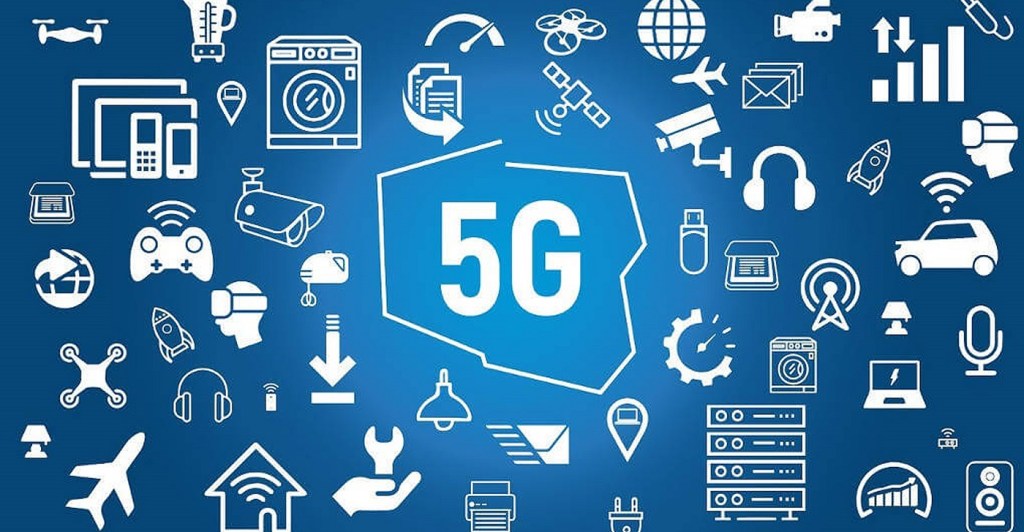
The 5G network is designed to connect a far greater number of devices than a traditional cellular network does. That internet of things trend you keep hearing about? 5G can power multiple devices around you, whether it’s a dog collar or a refrigerator.
The 5G network was also specifically built to handle gear used by businesses, such as farm equipment or ATMs, and can adjust for differing needs. For example, some products like sensors for farming equipment don’t need a constant connection. Those kinds of low-power scanners are intended to work on the same battery for 10 years and still be able to periodically send data.
How does it work?
5G initially used super high-frequency spectrum, which has shorter range but higher capacity, to deliver a massive pipe for online access. Think of it as a glorified Wi-Fi hotspot.
But given the range and interference issues, the carriers are also using lower-frequency spectrum — the type used in today’s networks — to help ferry 5G across greater distances and through walls and other obstructions.
Last year, Sprint (now part of T-Mobile) claimed it has the biggest 5G network because it’s using its 2.5 gigahertz band of spectrum, which offers wider coverage. But T-Mobile in December launched a nationwide network using even lower-frequency spectrum, which can spread further. T-Mobile intends to use Sprint’s 2.5 GHz spectrum to add more speed to its network. AT&T also launched 5G with lower bands at the end of last year, and says it plans to have nationwide coverage by the end of summer.
The result is that the insane speeds companies first promised won’t always be there, but we’ll still see a boost from what we get today with 4G LTE.
From predicting outbreaks to devising treatments, doctors are turning to AI in an effort to combat the COVID-19 pandemic.
While machine learning algorithms were already becoming a part of health care, COVID-19 is likely to accelerate their adoption. But lack of data and testing time could hinder their effectiveness — for this pandemic, at least.
With millions of cases and outbreaks in every corner of the world, speed is of the essence when it comes to diagnosing and treating COVID-19. So it’s no surprise doctors were quick to employ AI tools in an effort to get ahead of what could be the worst pandemic in a century.
HealthMap, a web service run by Boston Children’s Hospital that uses AI to scan social media and other reports for signals of disease outbreaks, spotted some of the first signs of what would become the COVID-19 outbreak. This was days before the WHO formally alerted the rest of the world.
Early in the outbreak the Chinese tech company Alibaba released an AI algorithm that uses CT scans of possible coronavirus patients and can diagnose cases automatically in a matter of seconds.
In New York, Mount Sinai Health System and NYU Langone Health have developed AI algorithms that can predict whether a COVID-19 patient is likely to suffer adverse events in the near future and determine when patients will be ready to be discharged. Such systems can help overburdened hospitals better manage the flow of supplies and personnel during a medical crisis.
Even before COVID-19, AI was already becoming a bigger part of modern health care. Nearly $2 billion was invested in companies involved in health care AI in 2019, and in the first quarter of 2020, investments hit $635 million — more than four times the amount seen in the same period of 2019, according to digital health technology funder Rock Health.
The advance of AI is partially a result of the rapid increase in data, the lifeblood of any machine learning system. The amount of medical data in the world is estimated to double every two months.
Engineer and entrepreneur Peter Diamandis told Wired an estimated 200 million physicians, scientists and technologists are now working on COVID-19, generating and sharing data “with a transparency and at speeds we’ve never seen before.”
“We understand who is at risk and how they’re at risk, and then we can get the right treatment to them,” says Zeeshan Syed, the CEO of Health[at]Scale, an AI health care startup.
In trials, at least, AI has demonstrated a decent record of success, especially when it comes to rapidly diagnosing COVID-19 by interpreting medical scans.
A study published in Nature Medicine this month found an AI system was more accurate than a radiologist in diagnosing COVID-19 patients using CT scans — X-ray images of lungs — combined with clinical symptoms.
A systematic review of preprint and published studies of AI diagnostic systems for COVID-19 published in the British Medical Journal in April noted the models reported “good to excellent predictive performance,” but cautioned the data was still limited for real-world applications and at high risk for bias.
That’s the perennial challenge for AI systems in any field. Experts worry models that perform well in an experiment may not be able to replicate that success in a hospital under stress.
“There is a lot of promise in using algorithms, but the data in the biomedical space can be really difficult to deal with,” says Gabe Musso, the chief science officer at BioSymetrics, a biomedical AI company that uses machine learning for simulation-based drug discovery. Genetic data, imaging data and data from electronic health records are often unstructured and rarely share a common format, complicating efforts to feed the information into an algorithm.
Many of the AI diagnostic systems being rushed into the fight against COVID-19 were developed before the pandemic and thus were trained on other respiratory diseases like tuberculosis. That reduces their accuracy — especially if their training datasets don’t match the gender or age of typical COVID-19 patients.
As a result, pioneering computer scientist Kai-fu Lee wrote recently, “I would give [AI] a B-minus at best” for its performance during the pandemic.
As both the size and quality of medical data on COVID-19 improves, so should the AI systems that draw from it. But that will take time.
“AI will not be as useful for COVID as it is for the next pandemic,” Rozita Dara, a computer scientist at the University of Guelph, told Science recently. (Source: Axios)
The COVID-19 pandemic will accelerate digital adoption in India as increasing number of people shop online and small businesses digitise, Morgan Stanley said crediting Reliance Jio’s 4G telecom services for spurring the digital economy by propelling internet usage in the country.
In a 53-page report on ‘India’s Digital Economy in a Post-COVID-19 World’, Morgan Stanley said 2020 will likely see increasing online penetration in grocery and will put a few Super Apps into motion.
India’s total online shopper base at 30 per cent of its internet population is low when compared with 78 per cent in China and 70-plus per cent in the US.
Morgan Stanley projected India’s 670 million internet users to rise to 914 million by 2027 and online shoppers to jump to 590 million from 190 million in 2020. The average spend per online shoppers is also projected to nearly double to USD 318.
While in the past few years digital adoption in India has been evolving with increasing 4G adoption and rising internet penetration, the overall transactional base was still small.
“The launch of Reliance Jio’s 4G telecom services in September 2016 helped spur the digital economy in India as it propelled internet usage in the country, with fast, reliable, and cheap 4G services leading to significant growth in data usage (especially on music and video content),” it said.
Morgan Stanley said COVID-19 has relieved some apprehension relating to digital transactions. “We believe COVID-19 could accelerate the shift to online transactions (such as e-commerce and payments) and provide a tailwind to growth in India’s digital economy.”
Stating that a larger increase in its online shopping base is needed to drive growth in its digital economy, it said COVID-19 has the potential to do just that.
The power of online has been seen in the past few months as start-ups helped consumers shop, pay for bills, converse, entertain, and collaborate without much physical contact.
“We believe that this digital adoption has the power to pull growth forward by a few years in India’s internet industry,” it said.
The analyst said in a post-COVID-19 world, “India’s online shopping population could see a sharp increase, online penetration in grocery could finally inflect as e-commerce and new entrants make a bigger push in this category, digitization of small and medium business (SMB) enterprises could take centre-stage (and) investments in segments such as gaming, edtech, healthtech, and cloud could increase.”
Also, the country could see the emergence of a few large tech companies (Super Apps or category leaders) in the next 5-10 years.
“These developments are notably important for some of the global tech companies that are invested in India,” it said.
Stating that India could see the emergence of some large tech companies in the next 5-10 years, Morgan Stanley said Amazon and Flipkart, amongst the e-commerce companies, and Paytm and PhonePe, amongst the digital payment companies, have been trying to build several offerings on their platforms.
However, their penetration in their core categories (retail/payments) is still small and hence, the ability to make huge investments in other segments/categories is limited by both capital and management/execution bandwidth, it said.
“Another company that is talking about creating a digital ecosystem is Reliance Industries/Reliance Jio. With 388 million 4G users on its platform, it has touched more than 50 per cent of the total internet base in India,” it said adding the company has talked about plans of foraying into the digital economy with Jiomart (its new commerce offering), payments, health tech, edtech, cloud services, agri tech, etc.
Morgan Stanley said the war is heating up on grocery, with potential digitization of small business, an initiative similar to Alibaba’s LST in China.
“Online grocery is characterized by its large potential market size (USD 400 billion), low penetration (0.2 per cent), customer stickiness, and high repeat rate, and hence ticks most boxes for large companies to have a significant presence in the segment, more importantly, if one were to think about emerging as a Super App,” it said.
Reliance Retail and WhatsApp have entered into a commercial agreement to accelerate Reliance Retail’s new commerce business on the Jiomart platform using WhatsApp. Jiomart is a platform that helps RIL support small merchants and Kirana stores in serving end-consumers.
Reliance aims to focus on 60 million micro, small and medium-sized businesses along with the 30 million small merchants and millions of SMEs with the digital platform, it added.
Amazon India has also announced a USD 1 billion investment over the next five years to digitize 10 million SMBs, enabling USD 10 billion in cumulative exports by Indian businesses selling on Amazon worldwide by 2025, it added
One of the big outcomes of the Coronavirus pandemic has been the rise of digitisation in different sectors and all spheres of life. While the private sector has always been at the forefront of this adoption, the Government still has a long way to go.
Currently, technology implementation in government and government-run services has been selective and in very small portions. It is high time that the Governments should push for more digitisation. Opinion makers call for more collaboration between different States in India and urge the Centre to give more levy to States to set up more manufacturing parks which will in turn encourage Prime Minister’s call for Vocal for Local.
“Digitisation has become the need of the hour and if it has to flourish thenwe need three things — digital literacy, digital infrastructure and digital innovation. While the National Digital Literacy Mission needs to be strengthened it is also important that States also concentrate on digital literacy. In terms of infrastructure, as a nation we need to look at digitisation as a basic right so as to make a digital revolution. And finally, it is also important that digital innovation reaches each and every citizen,” Telangana IT Minister Rama Rao opined in a recent virtual digital summit.
While India’s ability to lead large corporates is recognised worldwide, it is still considered to be a services oriented nation and for this to change the Centre and State governments need to encourage more product companies from India and design strategies and policies for this endeavour.
Demand for 5G is rising — schools to governments, all depend on internet and technology now. And India is uniquely placed to fill in network gap left by China’s 5G
In the Covid chaos, there is arguably one winner: technology. Healthcare, businesses, households, schools, governments — all rely on it now. Work from home to G20 meet, technology is helping a world in lockdown function.
This surge in the use of technology, especially in communications, reinforces more than ever the need for 5G network. An expected exponential rise in data traffic, increasing machine to machine connections across various industries, partnerships and alliances for 5G monetisation, and rising adoption of Internet of Things (IoT) devices will continue to drive the demand for 5G. And yet, this demand for 5G will not be without its fair share of geopolitical ramblings.
Even before Covid-19 had sparked a new war of words between the US and China, the trade dispute had been escalating between the two economic giants. And at its centre was Huawei, a major 5G equipment manufacturer from China. Some in the West suspect Huawei to be the Chinese state’s backdoor to global surveillance. This led to Huawei either being barred from 5G networks in countries such as the US and Australia or allowed limited participation in countries such as the United Kingdom. Now, as 63 countries, including India, again confront China—this time over the mishandling of COVID-19—Beijing may find itself even more isolated over global 5G investments.
So, what do these trends—the soaring need for 5G and geopolitical wrangling over equipment manufacturing—mean for India? A lot, actually. India has the potential to offset any disruption to global supplies from Chinese companies in the 5G space.
Even before Covid-19 had sparked a new war of words between the US and China, the trade dispute had been escalating between the two economic giants. And at its centre was Huawei, a major 5G equipment manufacturer from China. Some in the West suspect Huawei to be the Chinese state’s backdoor to global surveillance. This led to Huawei either being barred from 5G networks in countries such as the US and Australia or allowed limited participation in countries such as the United Kingdom. Now, as 63 countries, including India, again confront China—this time over the mishandling of COVID-19—Beijing may find itself even more isolated over global 5G investments.
So, what do these trends—the soaring need for 5G and geopolitical wrangling over equipment manufacturing—mean for India? A lot, actually. India has the potential to offset any disruption to global supplies from Chinese companies in the 5G space. (Read more on The Print)



 GO DIGITAL